

Encyclopedia of Kazakh National Costume
1. Outerwear and Dresses
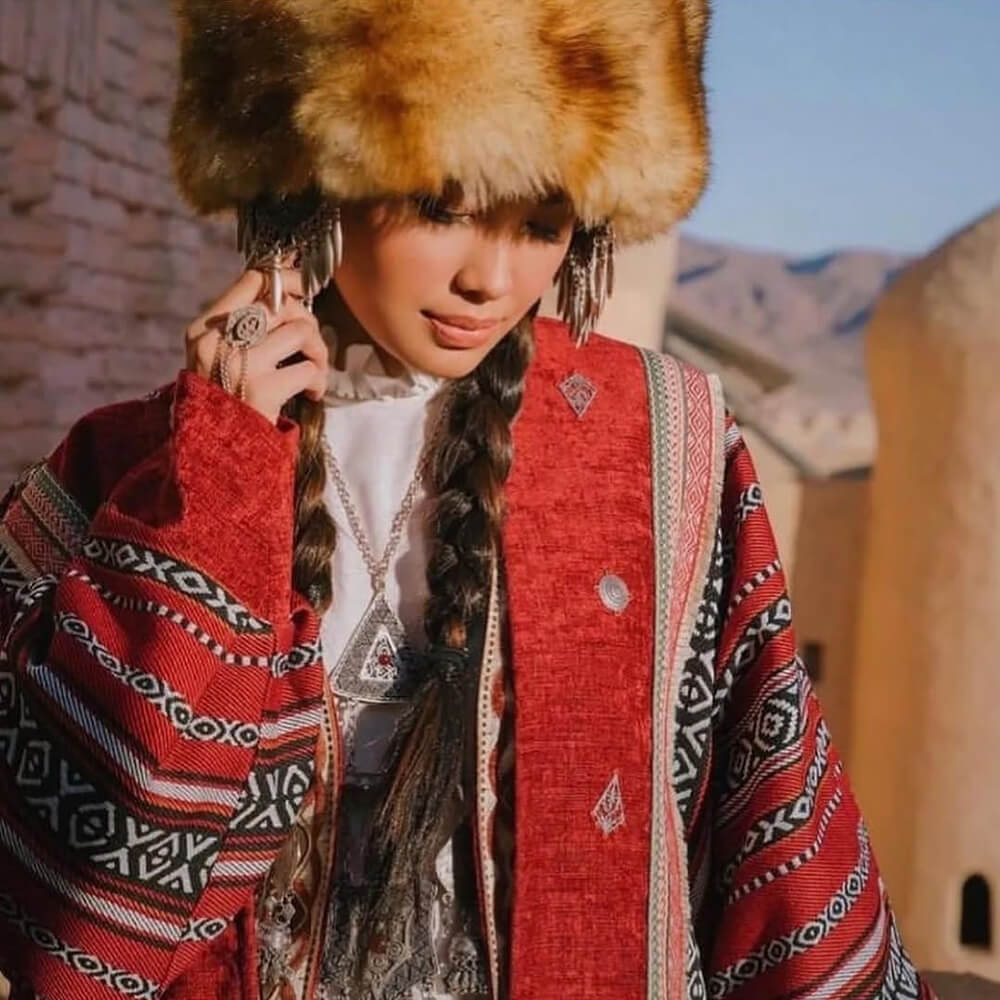
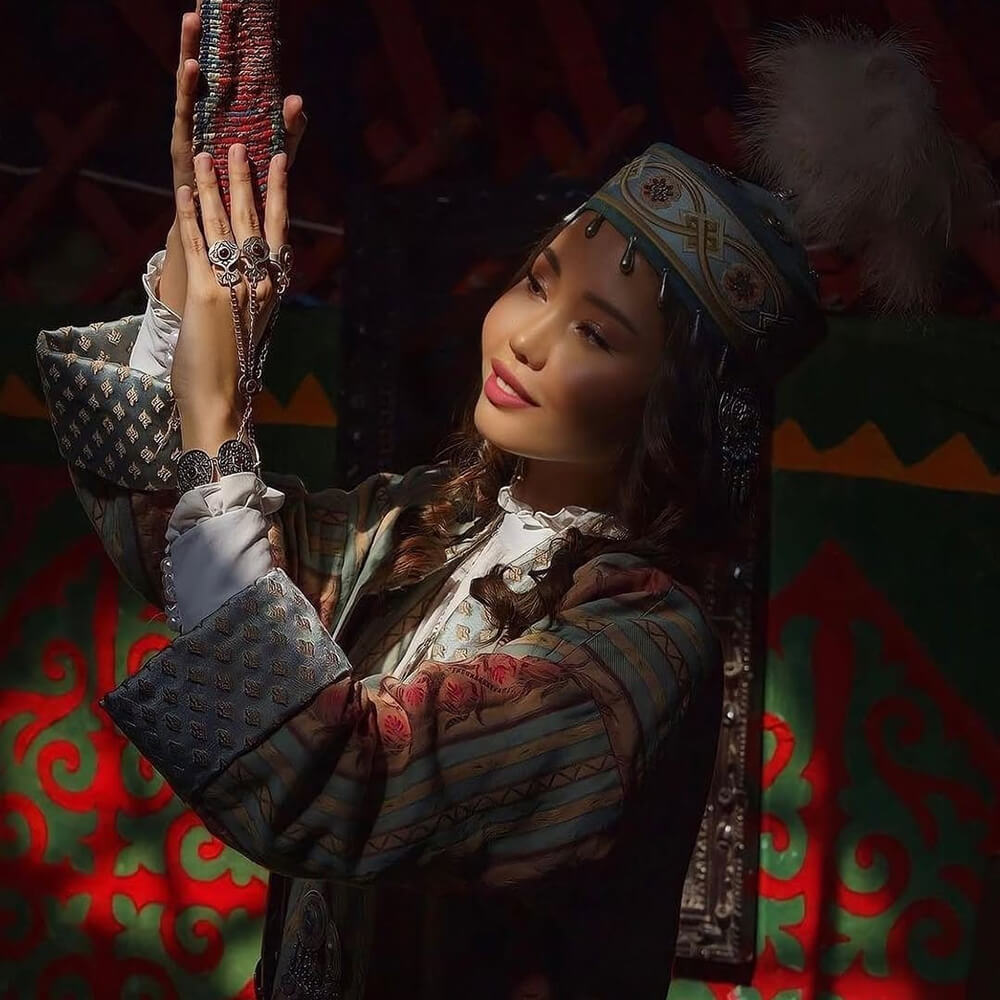
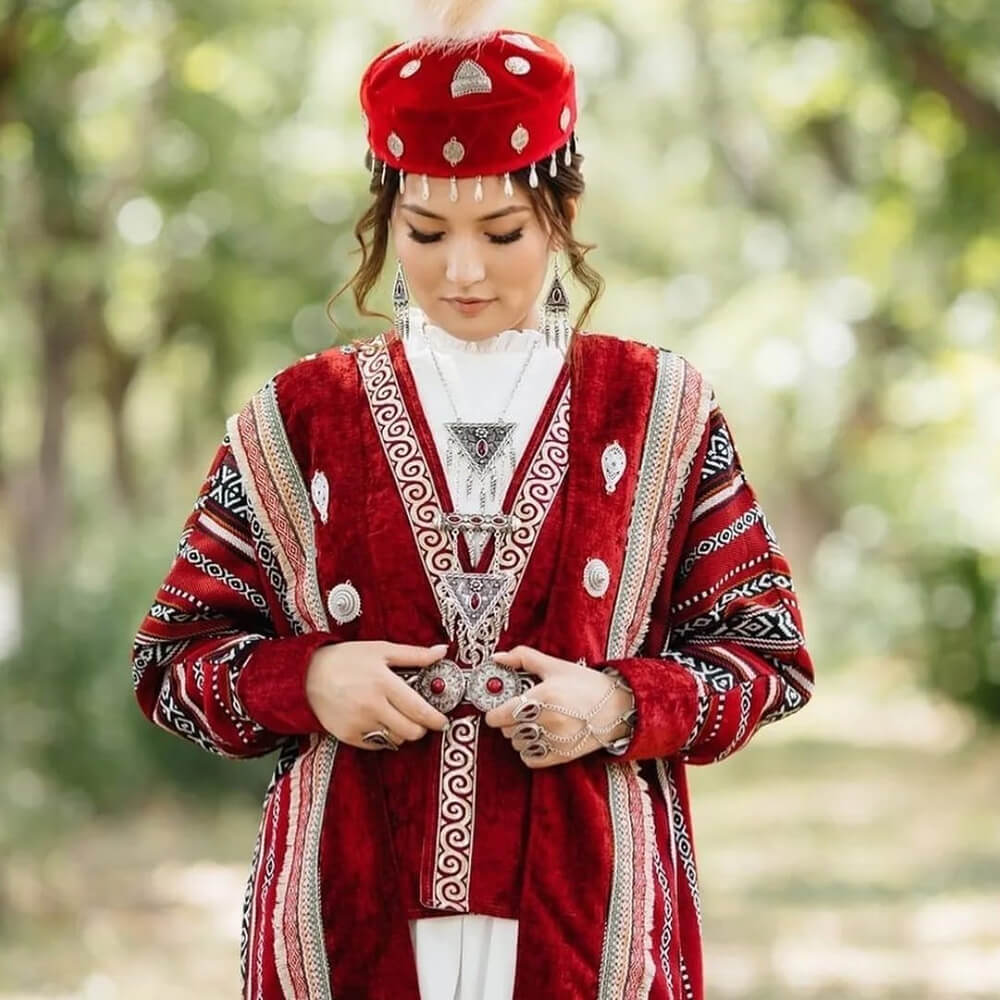
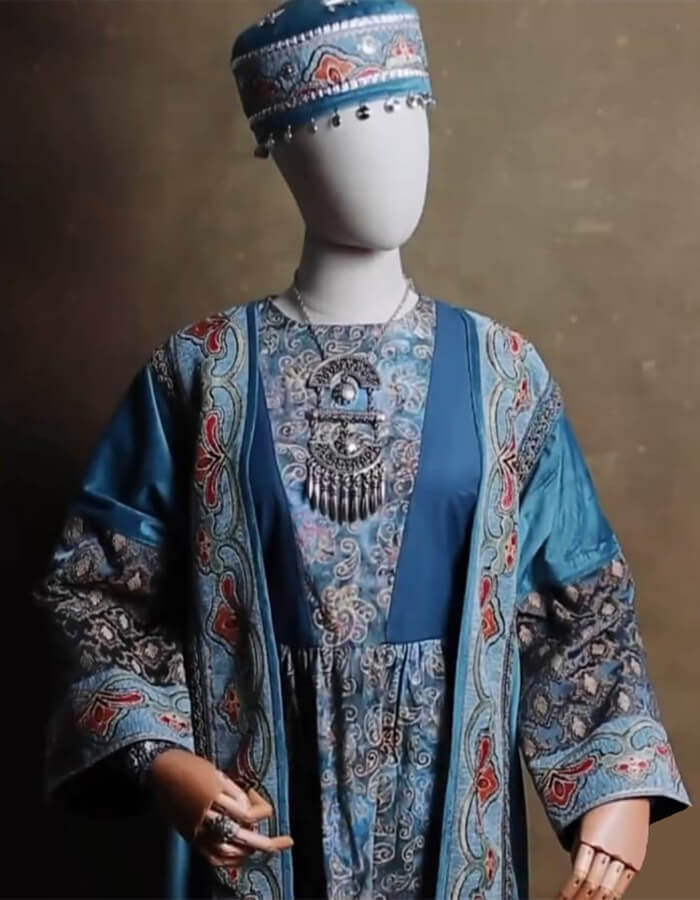
- Shapan is the main and most widespread element of the traditional Kazakh wardrobe. It is a long, loose-fitting, open-front robe worn by both men and women. Festive versions are tailored from expensive velvet, satin, or silk, and are richly decorated with embroidery featuring national ornaments.
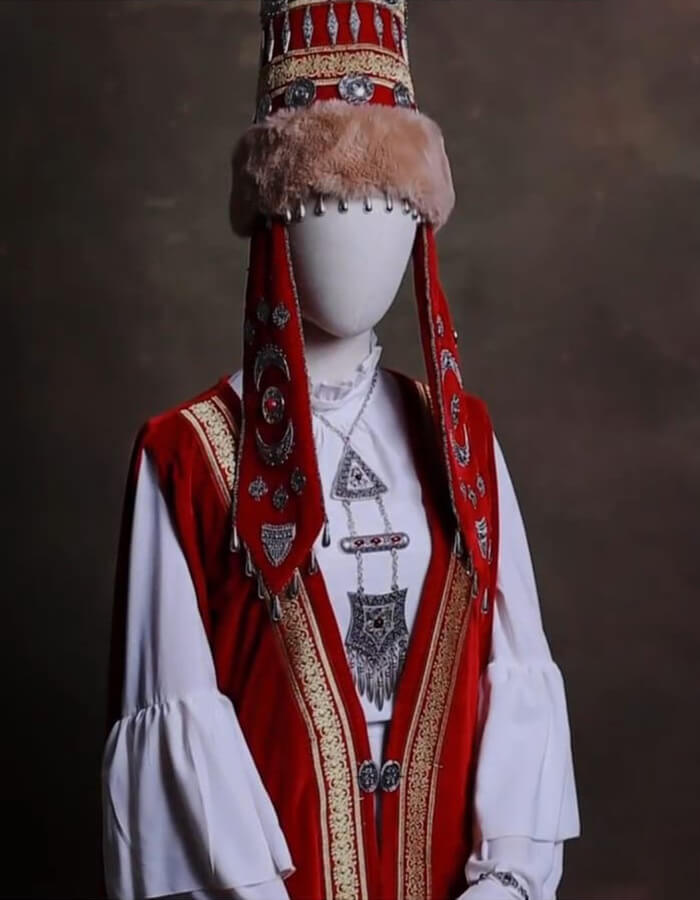
- Qamzol is a piece of women's clothing, a fitted vest worn over a dress. It can be sleeveless (jeñsiz qamzol) or have short sleeves. Tailored from bright, costly fabrics (velvet, velour, silk), it accentuates the elegance of a girl's silhouette. There was also a shorter and lighter version of a domestic girl's vest called käzekey.
- Shekpen is a spacious, open-front outerwear resembling a cloak or a robe. Traditionally, it is hand-woven from camel or sheep wool, protecting the wearer from both the cold and the steppe heat. There was also an elegant, mid-season variety made of the finest soft suede called jarğaq shekpen.
- Beshpent (also known as beshbet or beshpet) is a beshmet, a fitted piece of outerwear with a closed stand-up collar, tailored shorter than a shapan. It was worn by both men and women, often serving as an intermediate layer of clothing.
- Küpi is a warm garment that served as a substitute for a fur coat for less affluent layers of the population. It is a spacious robe insulated with a layer of whipped sheep or camel wool and covered on the outside with heavy fabric (cloth or velvet).
- Kebenek is an ancient, heavy cloak made of waterproof felted wool, featuring a high closed collar and a hood. It protected nomads and shepherds during long journeys from severe blizzards and heavy rains.
2. Winter Fur Clothing
- Ishik — a luxurious winter women's (as well as men's) fur coat made from valuable fur (fox, sable, marten, or wolf). From the inside, it was insulated with fur, and the outer side was always covered with expensive fabric — brocade, satin, or velvet.
- Ton — a massive winter fur coat or sheepskin coat (with wool inside). Unlike an expensive fur robe, ton (тон) was everyday, working, and very warm clothing for protection against blizzards. A heavy sheepskin coat made from the skins of adult rams with long, thick wool was called señse ton.
- Jarğaq ton — an elegant demi-season men's jacket or light sheepskin coat, sewn from foal or goat skin with the wool facing outward, richly embroidered with colored silk.
3. Underwear, Dresses, and Trousers
- Köilek — a traditional, loose-fitting, floor-length women's dress. Historically, it served as the foundation of a woman’s attire. It features a closed stand-up collar and is often adorned with lush flounces or ruffles on the sleeves and hem.
- Beldemshe — an ancient wrap-around women's skirt on a wide waistband, worn over a dress. It was made of velvet or silk, richly decorated with ornaments, and served both an aesthetic and protective function in cool weather.
- Shalbar (or sym) — wide men's trousers. They were made of durable suede, leather, or homespun cloth. Festive variants were decorated with embroidery along the side seams and the bottom of the pant legs.
- Jeide — a light men's undershirt made of cotton or silk. It was worn under a beshpent or shapan, had a straight cut, and protected the body from the friction of heavy outerwear during horseback riding.
- Dambal — loose-fitting under-trousers with a wide crotch, an obligatory element of both men's and women's undergarment wardrobes.
4. Military Equipment
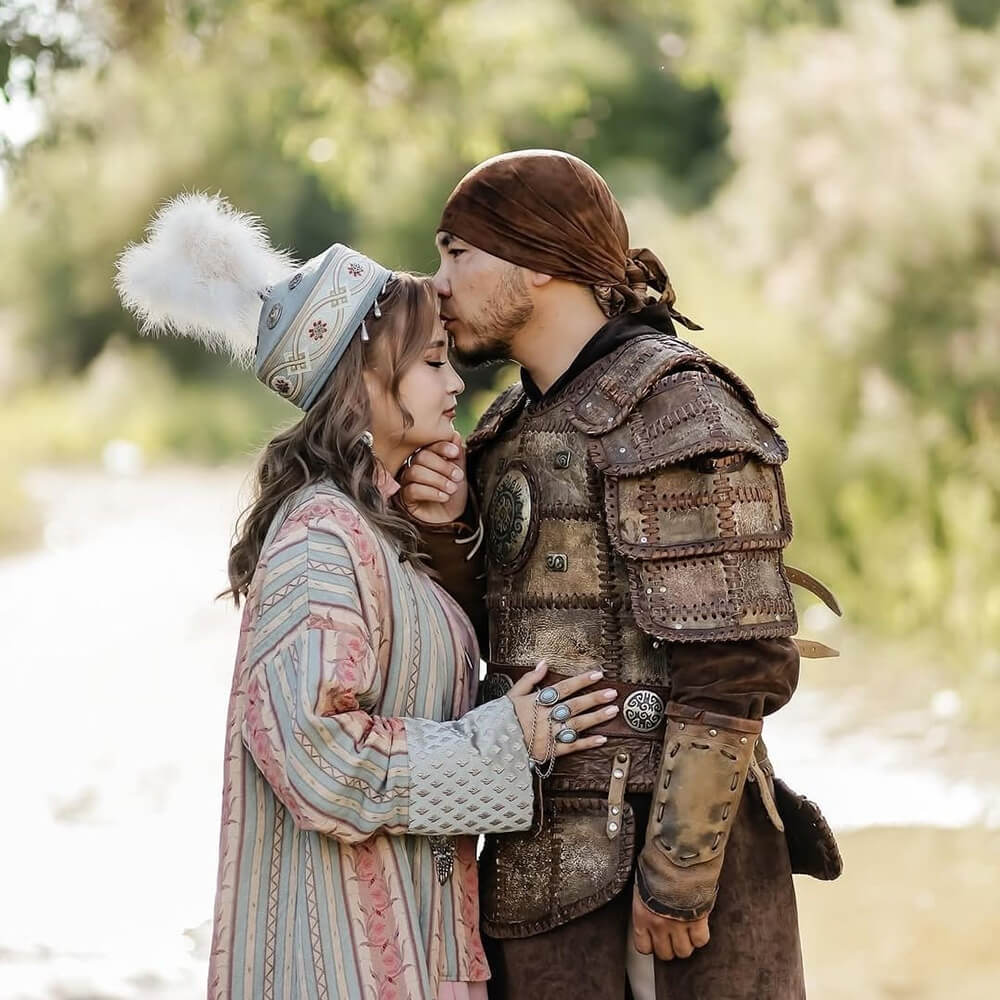
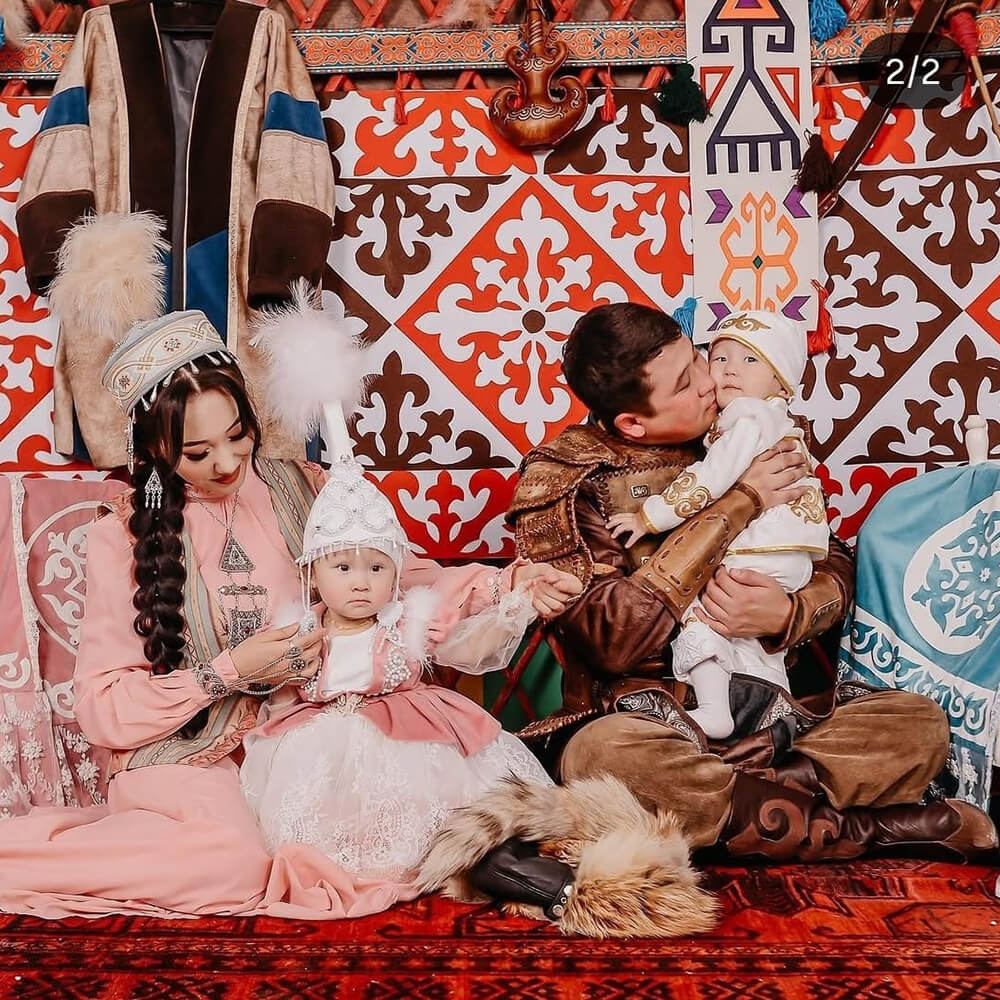
- Sauyt — traditional military armor of batyrs. It was made of thick, multi-layered leather or metal. It protected the warrior in battle and served as a symbol of valor, strength, and high status in the steppe hierarchy.
5. Headwear
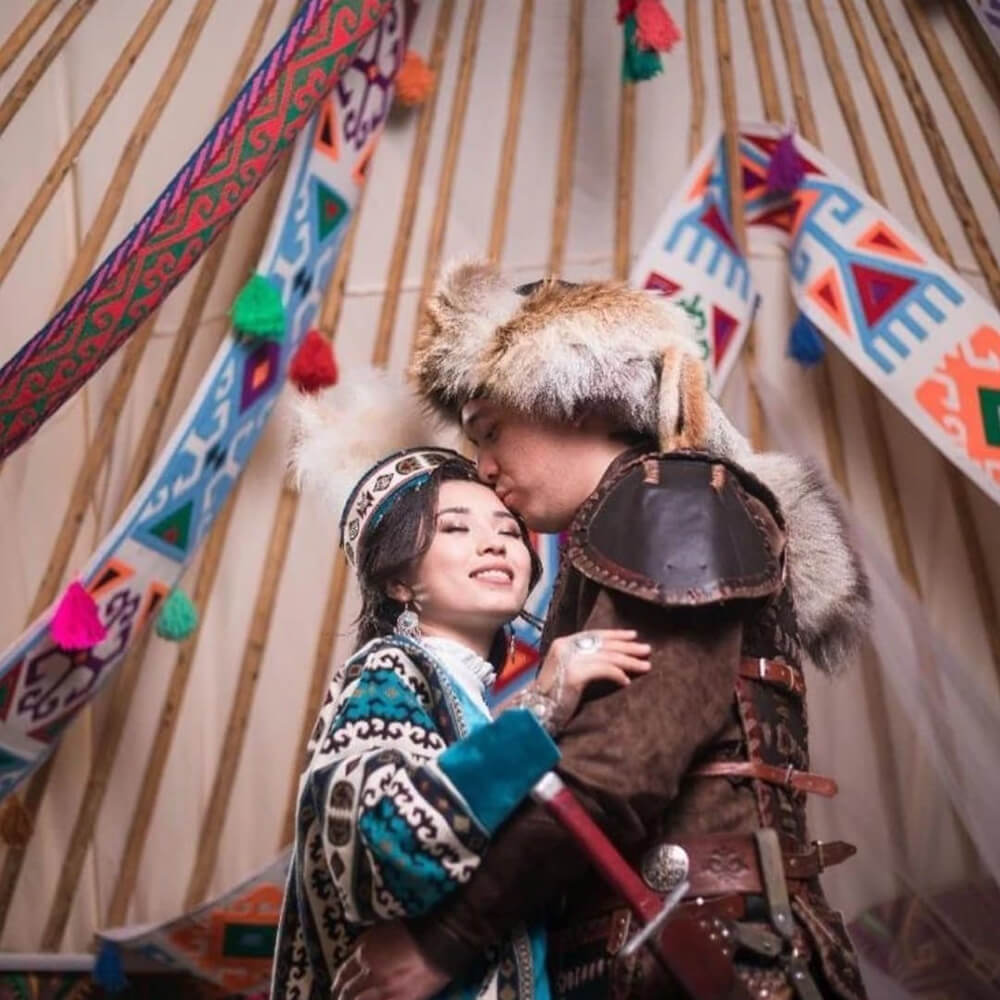
- Säukele — a tall, cone-shaped headpiece, the most luxurious and sacred element of a bride's wedding attire. It was crafted by hand, decorated with expensive fur trim, gold and silver plaques, precious stones, and crowned with a tuft of eagle-owl feathers (üki). A light silk or gauze veil-cape, the jelek, was attached to it.
- Börik — a traditional round headpiece with a stiff crown and an obligatory fur trim along the lower edge (made of sable, otter, or fox fur). It was worn by men and unmarried girls. The maiden variant is traditionally decorated with a fluffy tuft of eagle-owl feathers.
- Taqiya — a light, close-fitting round cap without a fur trim. It served as the basic headwear for men and girls. The maiden taqiya is richly decorated with embroidery, pearls, beads, and silver pendants. A small, domestic men's cap worn under heavy fur hats was called a keppesh.
- Aiyr qalpaq — an ancient ceremonial headpiece of the nobility and khans. It is a tall, cone-shaped hat made of fine white felt with upturned brims, covered on the outside with expensive silk or velvet and embroidered with gold threads. The traditional, everyday summer men's felt headwear is the qalpaq.
- Mūraq — a massive ceremonial headpiece worn over a taqiya or qalpaq. It had a complex shape with dual upturned brims and was intended exclusively for sultans, biys, and clan rulers.
- Qasaba — an elegant headpiece for young women, worn after the wedding instead of the bridal säukele. It is a rounded cap with a flat top shifted backward, decorated with gold embroidery, coins, and pendants.
- Jaulyq (or kimeshek-jaulyq) — a traditional headwear for married women, consisting of an embroidered chest piece covering the neck and shoulders, and a long white veil-cape. It symbolizes family status, motherhood, and loyalty to traditions.
- Tymaq — an ancient, warm men's hat. It is sewn from sheepskin, fox, or other fur. It features wide fur flaps that reliably protect the ears, neck, and back of the head from severe frosts. In a heavy blizzard, a felt or leather hood with long flaps, a küläpara, could be worn over headwear.
6. Belts and Footwear
- Kise beldik — a wide men's belt made of high-quality leather. It is traditionally decorated with embossed metal and silver plaques. Historically, it served as a sign of a man's maturity, and items necessary for a journey were attached to it.
- Saptama etik — massive men's winter boots with long, wide shafts and a slanted heel, adapted for horseback riding. Warm felt stockings (kiiz baipaq) were always worn inside such boots.
- Mäsi — light leather boots with a soft sole and no heel. They were worn indoors, and when going outside, leather overshoes (kebis) were worn over them, which were removed before entering onto carpets.
- Kök etik — elegant women's boots made of soft leather in bright colors (often green or red), decorated with appliqué, embossing, and embroidery on a small, graceful heel.
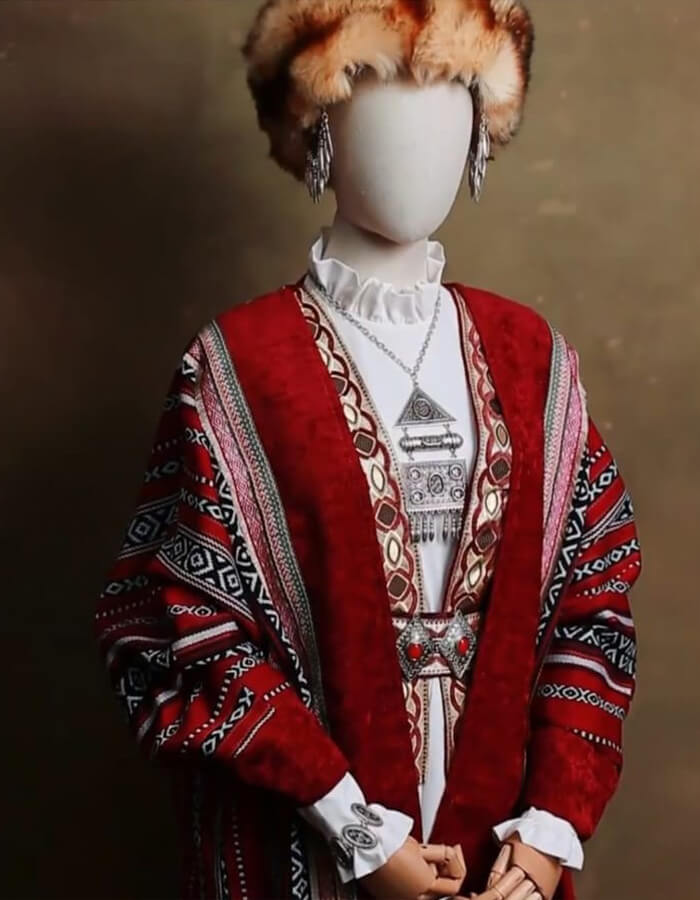
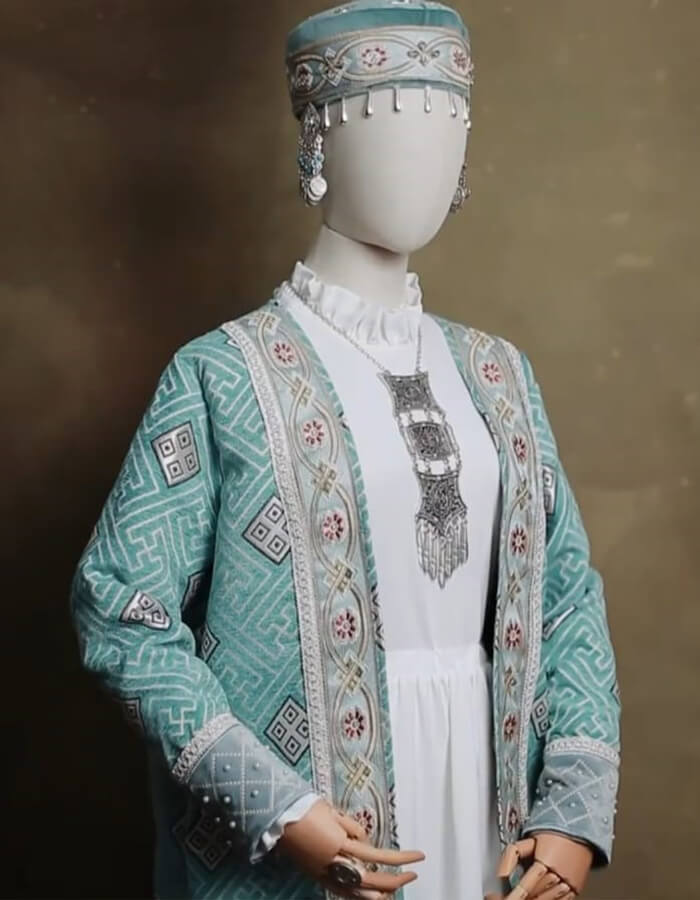
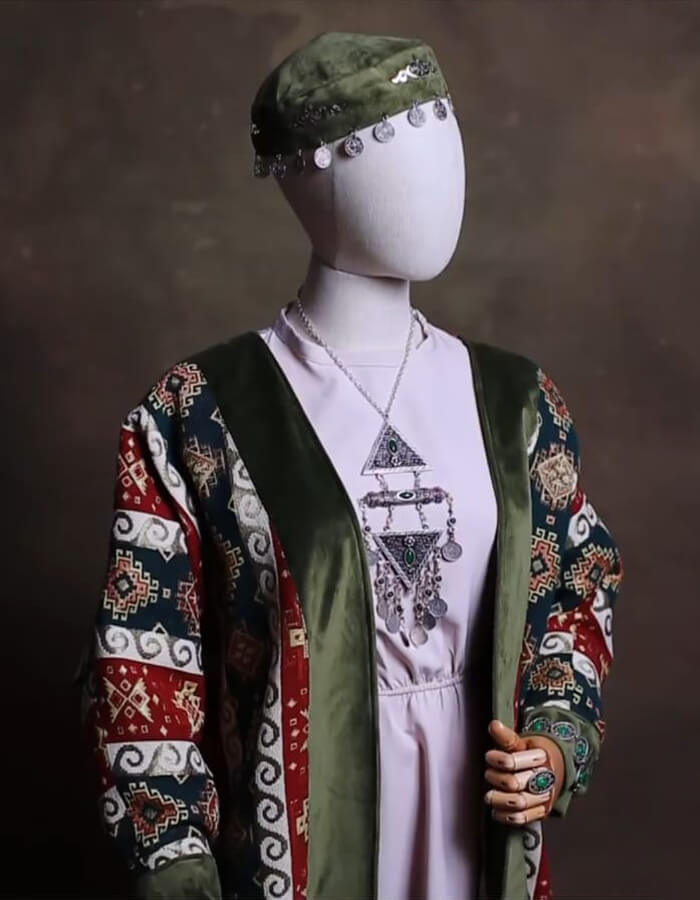
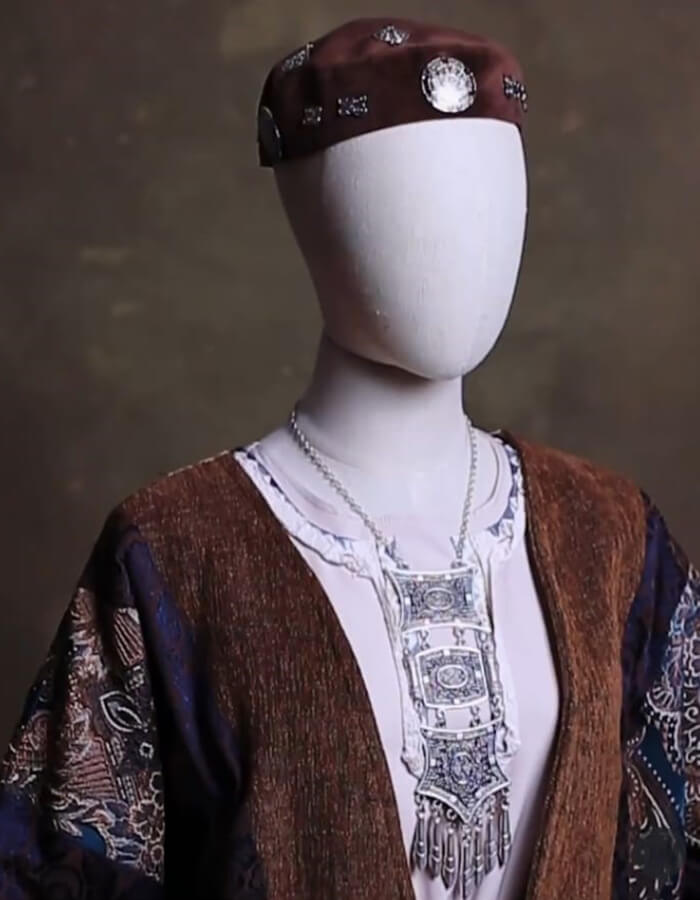
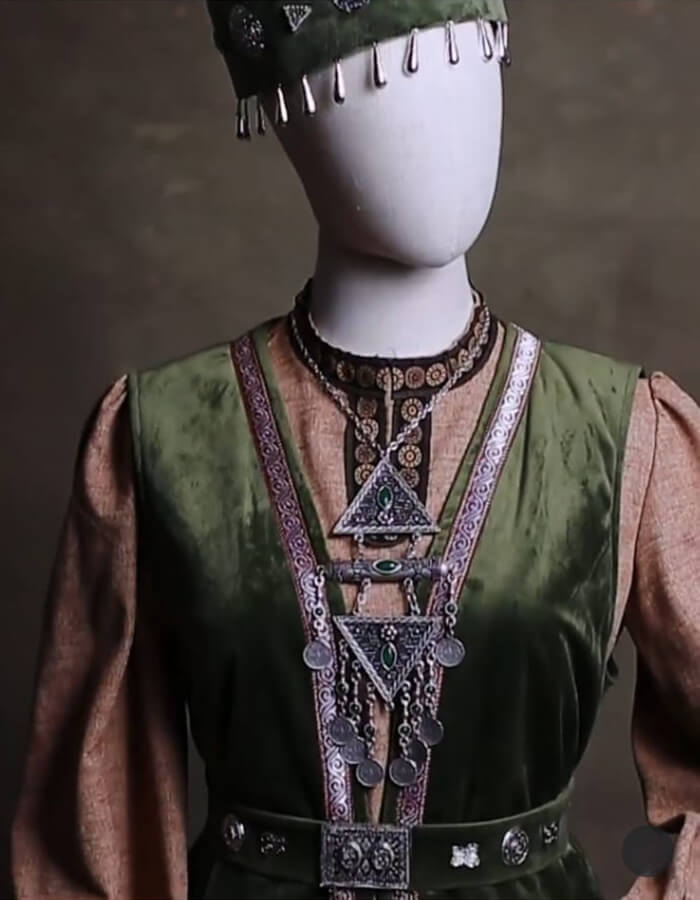
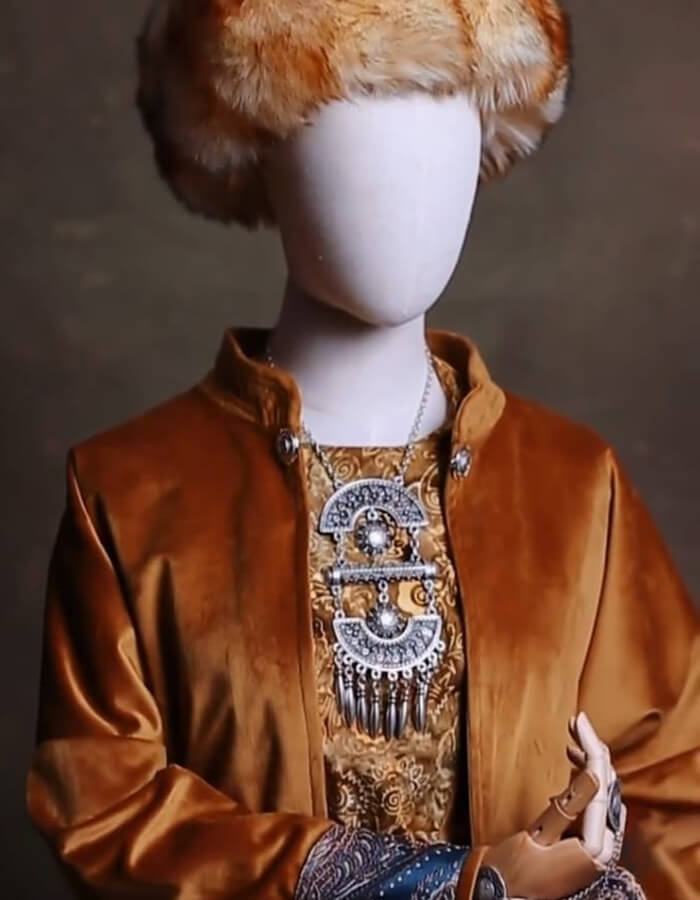
Ethnic Photoshoots
If you want to bring back unique, memorable shots from your trip, we are pleased to offer our Caravansarai Camspite guests an additional service — an ethnic photoshoot inside a Kazakh yurt with traditional furnishings. Our staff will help you select clothing elements and headwear from our national costume collection to fit your size and style.
You will be able to try on the image of a noble batyr or a steppe beauty, touch living history, and take colorful, vivid pictures for your family archive or social media.
Contact us for details: +7 777 226 65 60 (WhatsApp)