


Location
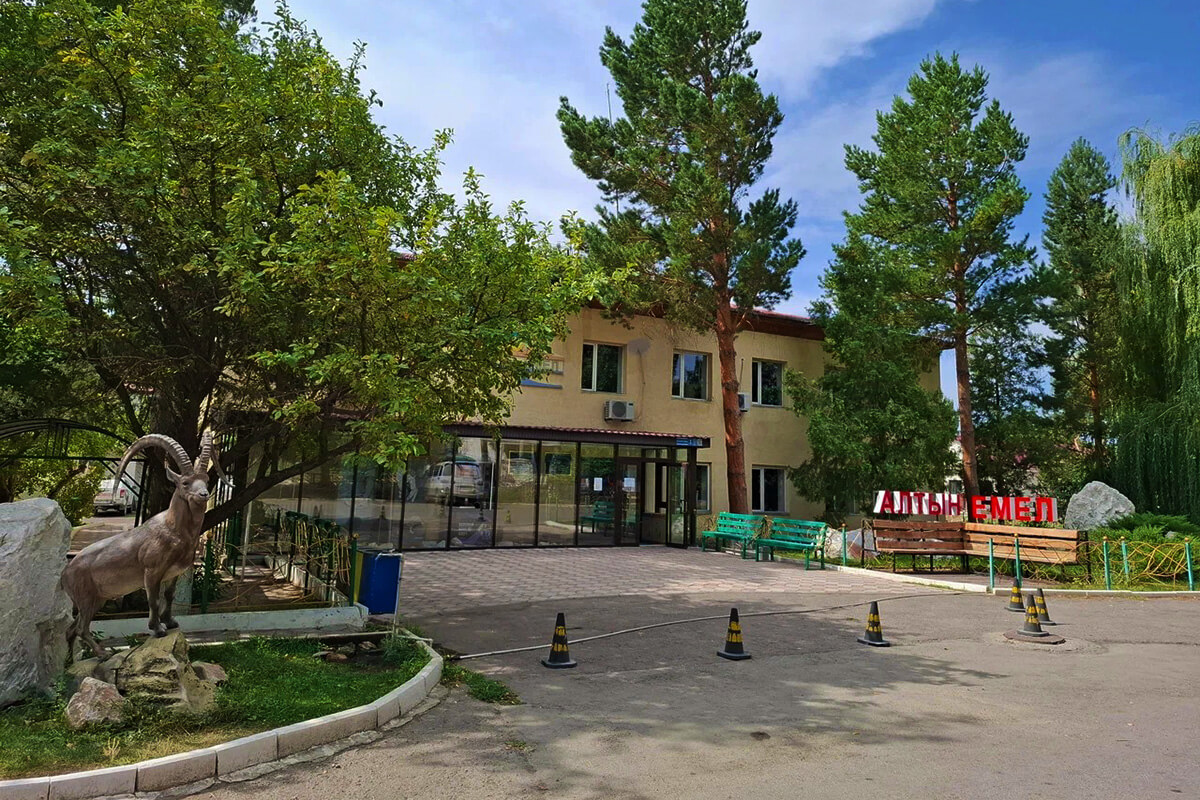
Altyn-Emel National Park is located in southeastern Kazakhstan, within the Kerbulak and Panfilov Districts of the Zhetysu Region, 250 km from Almaty. The central office of the park is located in the village of Basshi.
Office in Basshi
- Address: 2 Mametova St., Basshi Village, Jetysu Region, Kazakhstan.
- Hours: Daily, 08:00 AM – 05:30 PM (Break: 01:00 PM – 02:30 PM).
- Tourism Department: +7 (72840) 45 20 9, +7 705 610 25 11
- Online Cashier: +7 707 939 00 39
- Office Location: Google Maps | Yandex | 2GIS
How to Get to Altyn-Emel
From Almaty:
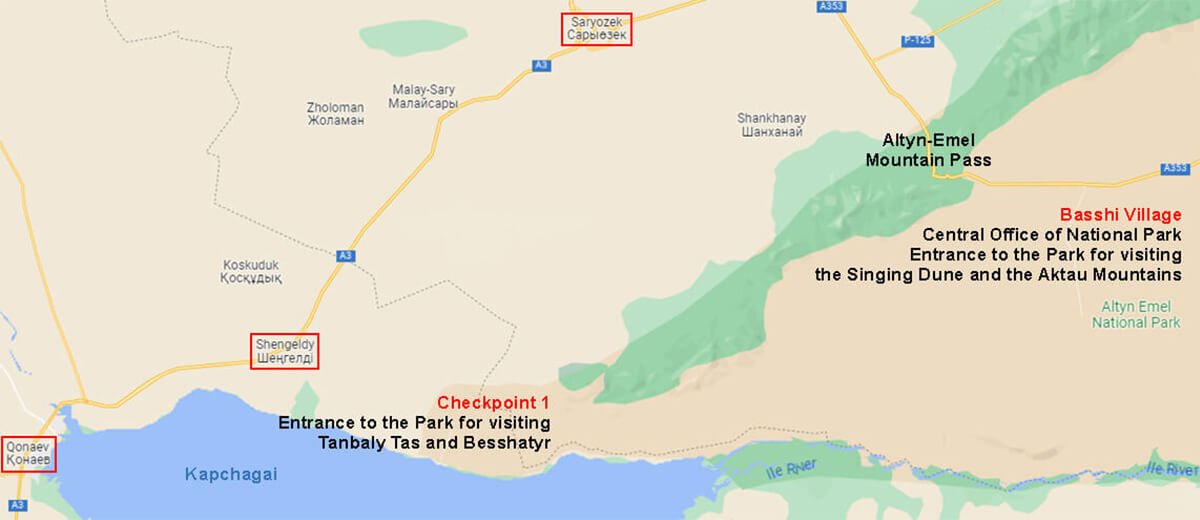
Route (Kapchagai toll highway): Almaty city — Konaev city — Saryozek village — Basshi village.
This is the only route leading to the central office of the park in the village of Basshi (to visit the Singing Dune and Aktau/Katutau Mountains). Before Saryozek village, at the roundabout, turn right towards Zharkent. After passing the Altyn-Emel mountain pass, drive 10 km and turn right at the sign for Basshi village.
Route (Kapchagai toll highway): Almaty city — Konaev city — Shengeldy village — Checkpoint #1 of the National Park.
This route is used exclusively to visit the Tanbaly Tas Petroglyphs and Besshatyr Burial Mounds (only with a pre-arranged permit). Past Konaev, turn right in the village of Shengeldy. Drive along the shore of the Kapchagai Reservoir until you reach Checkpoint #1 of the National Park.
From Charyn:
Route (Zharkent paved highway): Charyn Canyon — Chundzha village — Koktal village — Basshi village.

Geography
Geographic location: The park is situated within the Ili semi-desert zone of the Ili-Balkhash-Alakol desert depression. Altyn-Emel National Park includes the Basshi, Ili, and Konyrolen valleys; the desert mountains of Aktau, Katutau, Greater and Lesser Kalkans; the southern slopes of the Altyn-Emel and Koyandytau ridges; the spurs of the Dzhungarian Alatau (Sholak, Degeres, and Matai ridges); and the northern shores of the Kapchagai Reservoir and the Ili River.
Boundaries: To the north and west — the Sholak, Degeres, Matai, and Altyn-Emel mountains; to the south — the Ili River and the shore of the Kapchagai Reservoir; to the east — the Kokterek River floodplain.
Park area: 307,653.35 hectares.
Buffer zone: approximately 536,500 hectares.
Additional territories: the national park also manages two large nature reserves — Pribalkhashskiy (509,400 hectares) and Verkhnekoksuskiy (240,000 hectares).
Total area under park control: over 1.5 million hectares.
Nearby Sights
- The Ili River: On the way from Almaty, the crossing over the bridge is especially scenic as it passes between rocky cliffs over the Ili River at its widest point.
- Arkharly Petroglyphs: At the Arkharly Pass, away from the main highway, you can find ancient rock carvings tucked into rocky canyons. About 4,000 petroglyphs have been discovered here, dating from the Bronze Age to the early 20th century. The carvings depict argali, mountain goats, bulls, deer, horses, and riders, as well as tamgas (ancestral clan symbols) of ancient Turkic tribes and traditional Kazakh ornaments.
- Foothill Valley: Before reaching the Altyn-Emel Pass, you can stop for a rest in a picturesque foothill valley featuring a small pond and views of the Dzhungar Alatau Mountains.
- Soviet Retro Car Museum: On the return journey from Altyn-Emel to Almaty, at the entrance to Konaev along the Kapchagai highway, you will find the "Tulpar" museum-salon. It houses a rich and unique collection of Soviet-era vehicles and memorabilia.
- Turtle and Tiger Mountains: On your way between Zharkent and Altyn-Emel National Park (via the Zharkent highway), you can visit these uniquely shaped and vibrantly colored mountains.
- Zharkent Mosque: From Basshi village, the road leads to Zharkent, a town on the border with China. Its main attraction is a unique wooden mosque built in 1895 in the style of a Chinese pagoda.
- The Sacred Tree (Auliye Agash): Located near the town of Zharkent in the village of Auliyeagash, this is a popular pilgrimage site. It features a sacred tree over 700 years old, with a massive trunk measuring 6.5 meters in circumference.