

The "Shields" of the Singing Dune
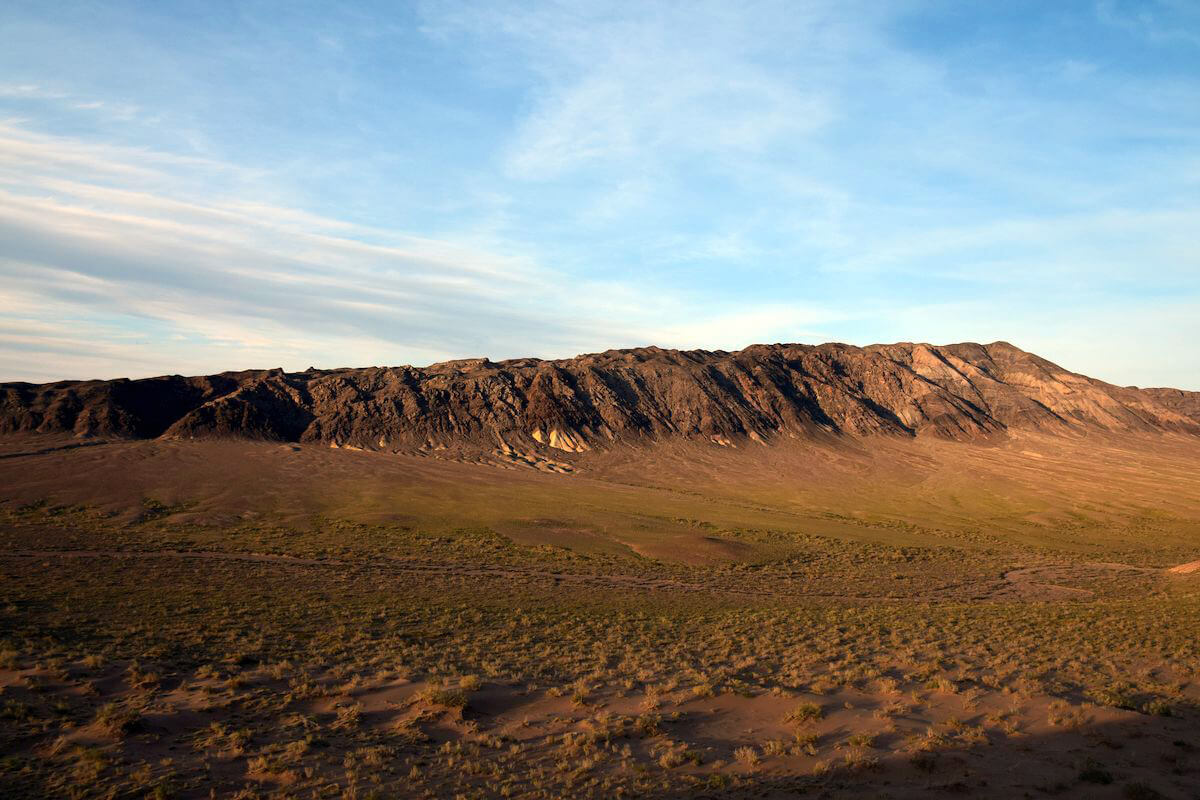
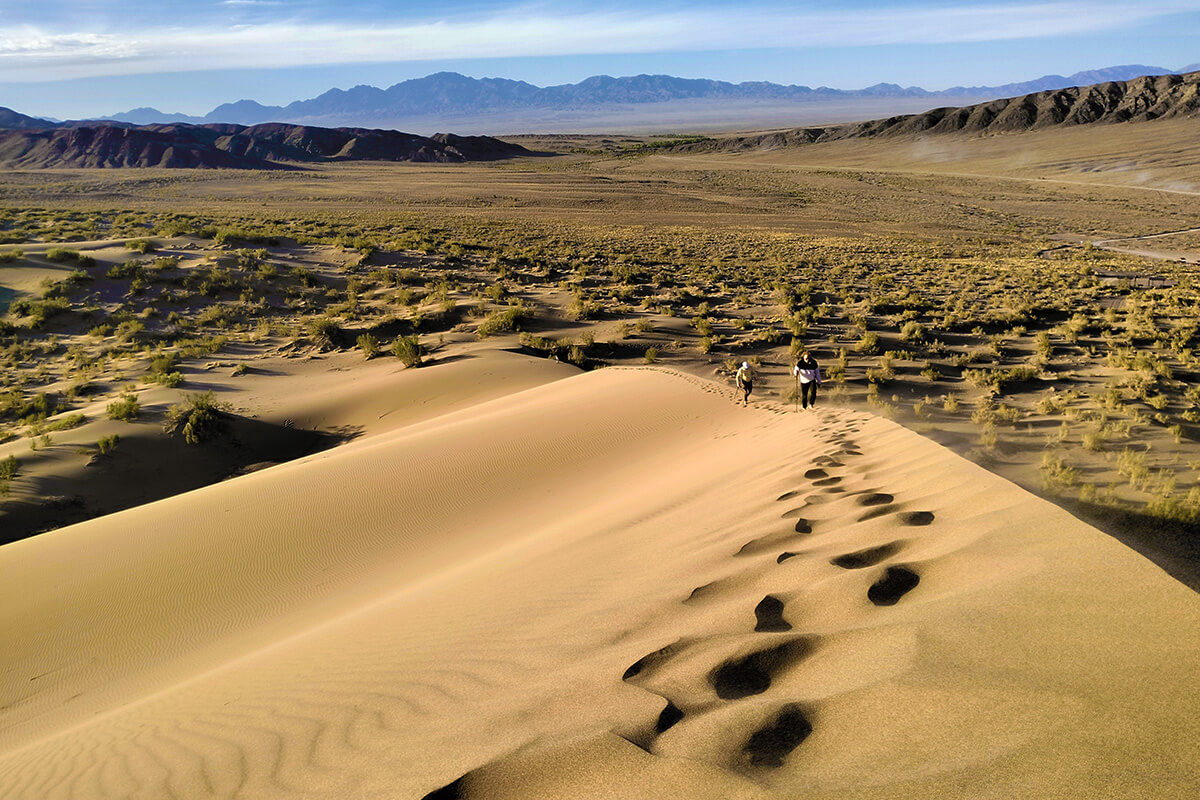
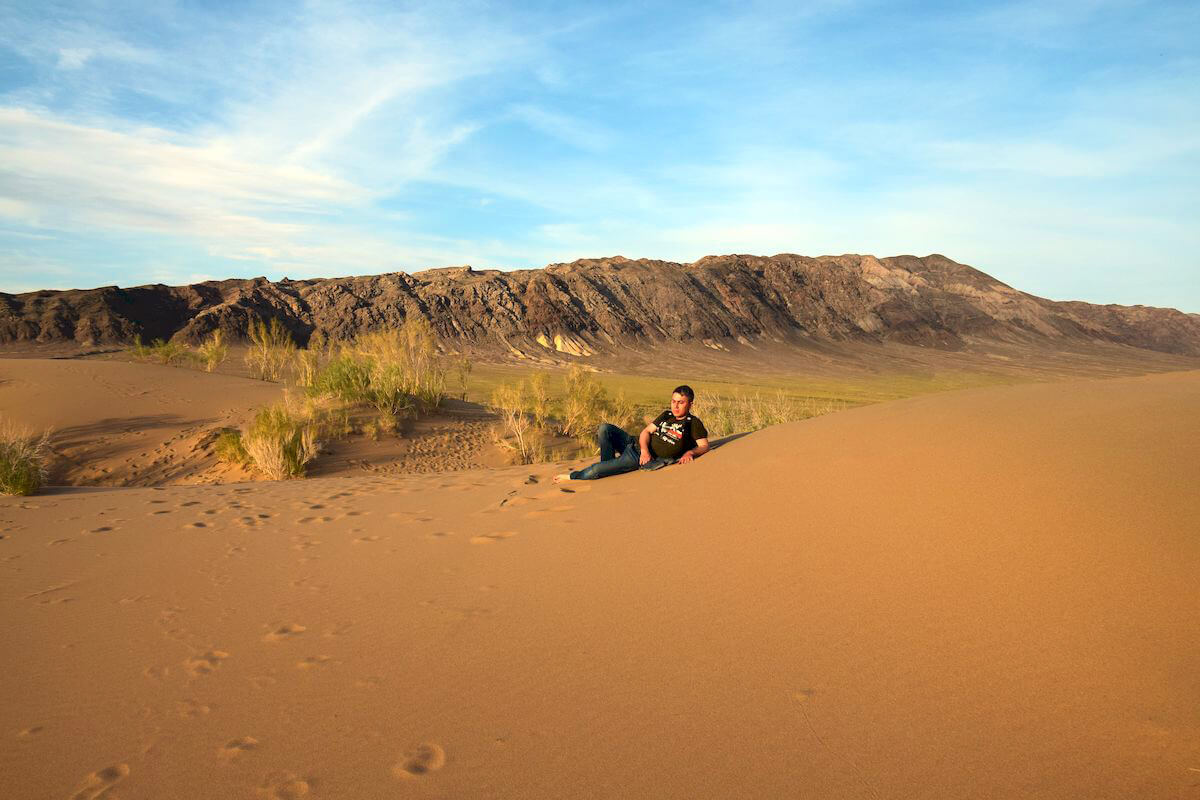
The Greater and Lesser Kalkans are located on the right bank of the Ili River, between the Degeres mountain range to the west and the Katutau Mountains to the east. These desert mountains surround the Singing Dune, protecting it from being dispersed by strong winds and keeping the sands in one place for thousands of years.
In Kazakh, "Kalkan" means "shield." The mountains live up to this name, sheltering the Basshi intermountain valley from shifting sands. When viewing the Greater Kalkan from the east (on the way back from the Aktau Mountains), the massif’s shape clearly resembles a warrior's giant shield.
The Greater Kalkan is elliptical in shape (15 × 12.5 km) and rises 800 meters above the Ili River valley.
The Lesser Kalkan (7.5 × 8 km) is located to the southwest and is nearly half the height of the main massif.
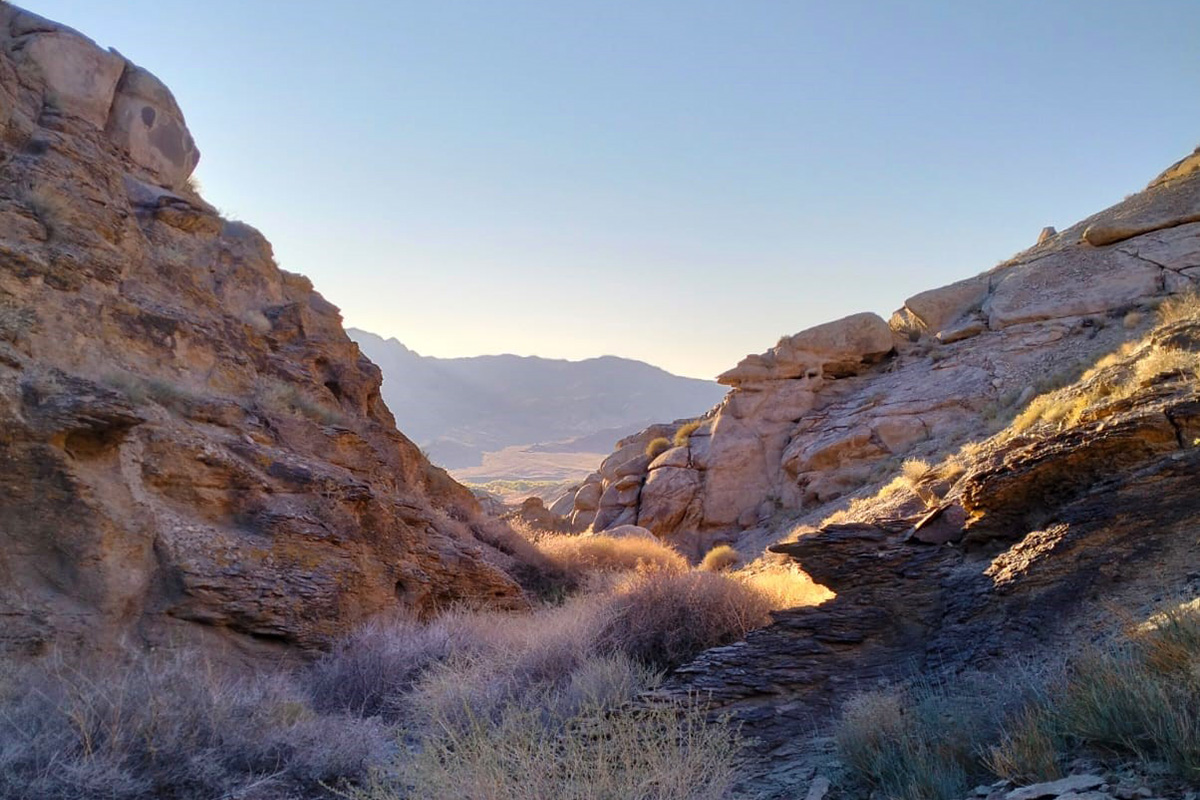
The Kalkans are one of the natural habitats of argali (mountain sheep) in the national park. Kulans (wild ass) and gazelles can also be spotted on the slopes and in the foothills. The rocky canyons serve as nesting sites for rare birds listed in the Red Data Book of Kazakhstan: the black stork, short-toed snake eagle, eastern imperial eagle, bearded vulture, cinereous vulture, and the golden eagle — the largest eagle in the region.
Kalkan Geopark
Altyn-Emel National Park is a unique geopark that vividly reveals the Earth's history and the processes of landscape formation. Along with the Aktau and Katutau mountains, the Kalkan Mountains are among the most significant features of this geopark.
Geology
From a geological perspective, the Kalkans represent a giant symmetrical fold in the Earth's crust known as an anticline. The core (nucleus) of the massif is composed of durable granitic rocks and ancient volcanic (effusive) materials. The "wings" (flanks) of the fold consist of Cretaceous deposits and younger Neogene layers.
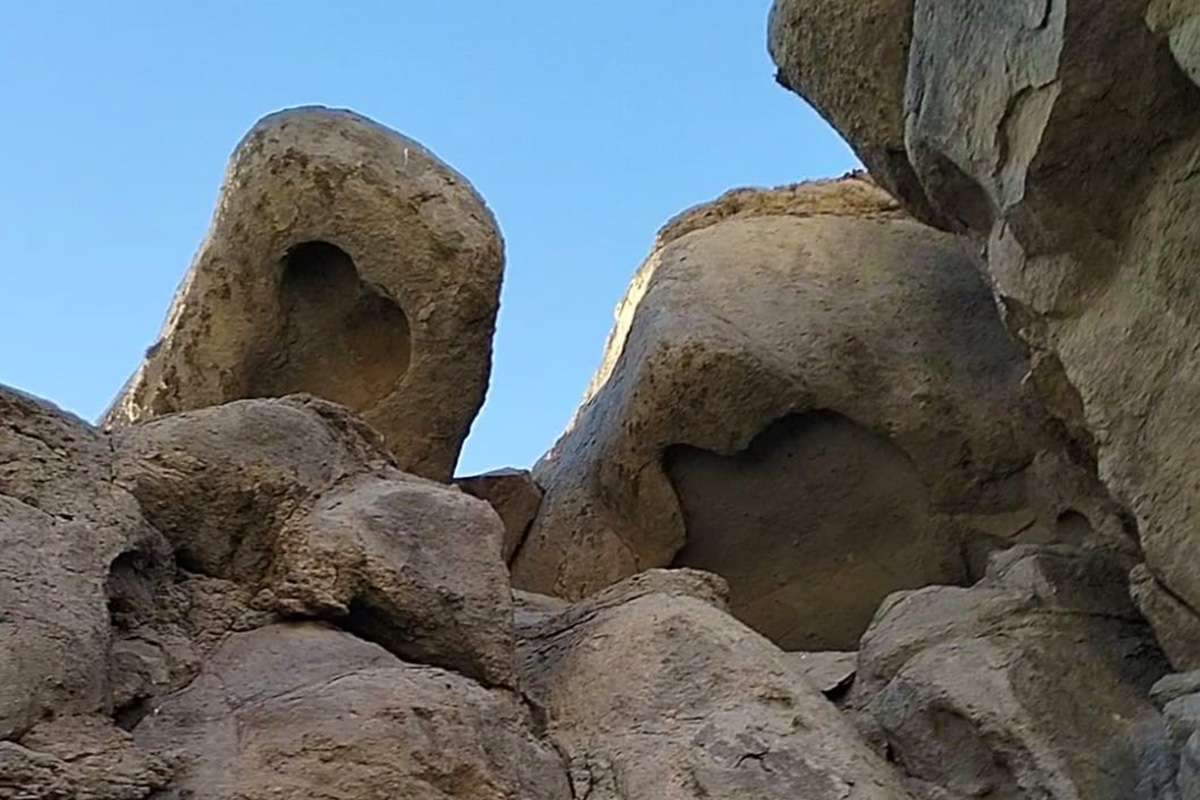
Scientists suggest that during the age of the dinosaurs, the Kalkan volcano was relatively low and existed as an island in the middle of a vast lake basin. At that time, sedimentary material washed down from the rising Northern Tien Shan mountains accumulated here. It is likely that a body of water existed at the base of the volcano where bottom sediments collected. Over time, these sediments completely buried the volcanic vents beneath them. Over the passing eras, denudation (weathering) and water erosion stripped away the soft overlying layers. As a result, ancient volcanic vents, frozen lava flows, ash deposits, and volcanic bombs — now worn into whimsical and bizarre shapes — have been revealed on the surface once again.
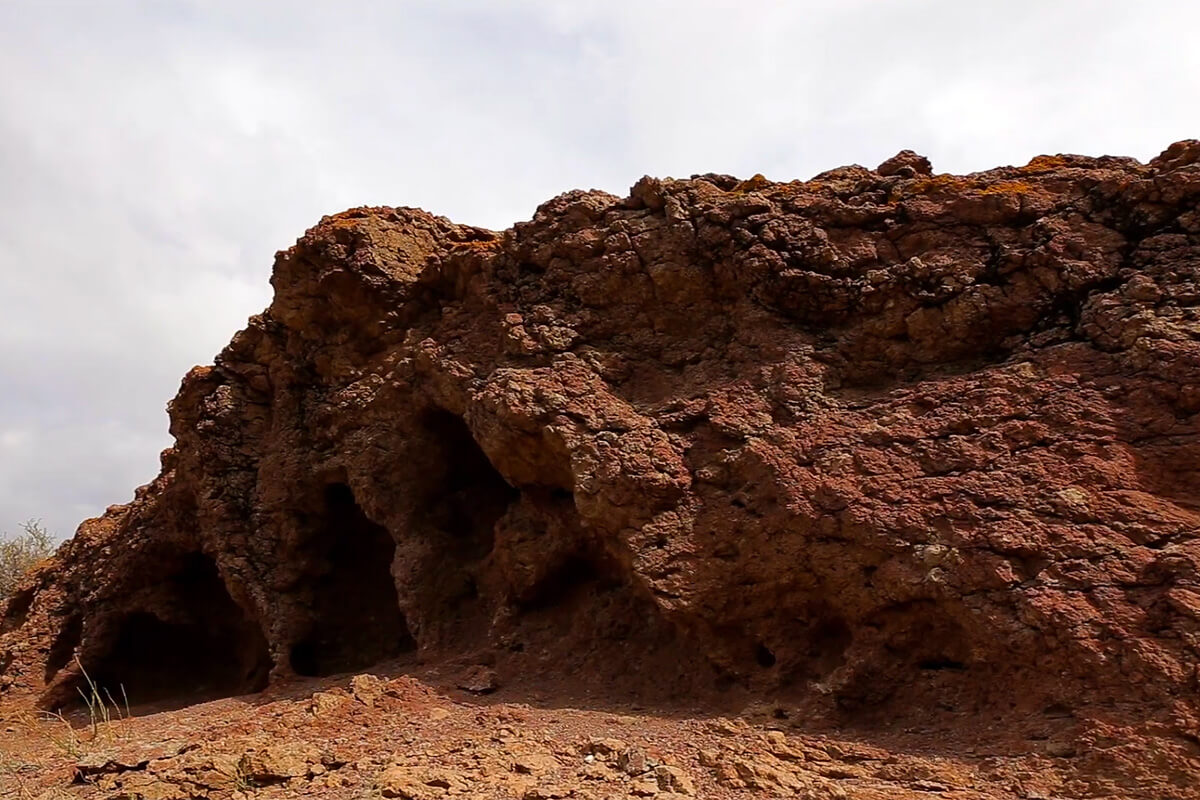
At the base of the Greater Kalkan, you can observe the results of unusual chemical and thermal processes that once took place deep within the Earth. The mountain surface here is composed of pink, gray, and purple stones (porphyrites). In some areas, hot groundwater eventually softened the hard rock, transforming it into a vibrant clay-like mass with crimson, yellow, and slate-blue patches. The rich colors of the stones and sand were created by ancient gases and mineral solutions. These substances rose from the depths through fissures in the Earth's crust that encircle the Greater Kalkan volcano in a dense ring.
Research shows that volcanic activity here lasted longer than previously thought. For instance, scientists discovered that a glowing, viscous mass emerging from the crater literally "baked" the surrounding soil, turning soft loams into hard brown stone.
Further evidence of late-stage activity is found in the mud volcanoes discovered in this area, whose eruptions were accompanied by emissions of volcanic slag.
Singing Dune Formation
The final appearance of this landscape was shaped by a powerful tectonic shift. Approximately 200,000 years ago, a large-scale displacement occurred along the South Kalkan Fault. The southwestern part of the ancient Kalkan volcano shifted to the left, forming the mountains we know today as the Lesser Kalkan. A narrow corridor emerged between the "split" sections of the volcano. Winds blowing from the southeast toward the west-northwest began to draw in ancient Paleocene sands that lay at the base of the mountain. About 10,000–12,000 years ago, these forces culminated in the formation of the massive sand mountains — the unique Singing Dune.